🦷 Maxfac Home 🛡 Oncology 💥 Trauma 📐 Jaw Surgery 🦷 Implants 👶 Cleft Care 🔄 TMJ Joint 💧 Swellings Facial Plastic 🦷 Difficult Tooth 📚 Patient Info
Book Appointment

Mouth sore that won't heal? Neck or face swelling? Don't wait.

Kolkata · Siliguri · India

When it's your face, your jaw, your mouth, your neck, your life — trust the surgeon who's seen it all.

Senior Maxillofacial & Head & Neck Oncosurgeon. Providing comprehensive care across 5 clinics in West Bengal. Specializing in oral oncology, facial reconstruction, corrective jaw surgery, and craniofacial trauma.

Trusted by thousands of patients across West Bengal and Northeast India.
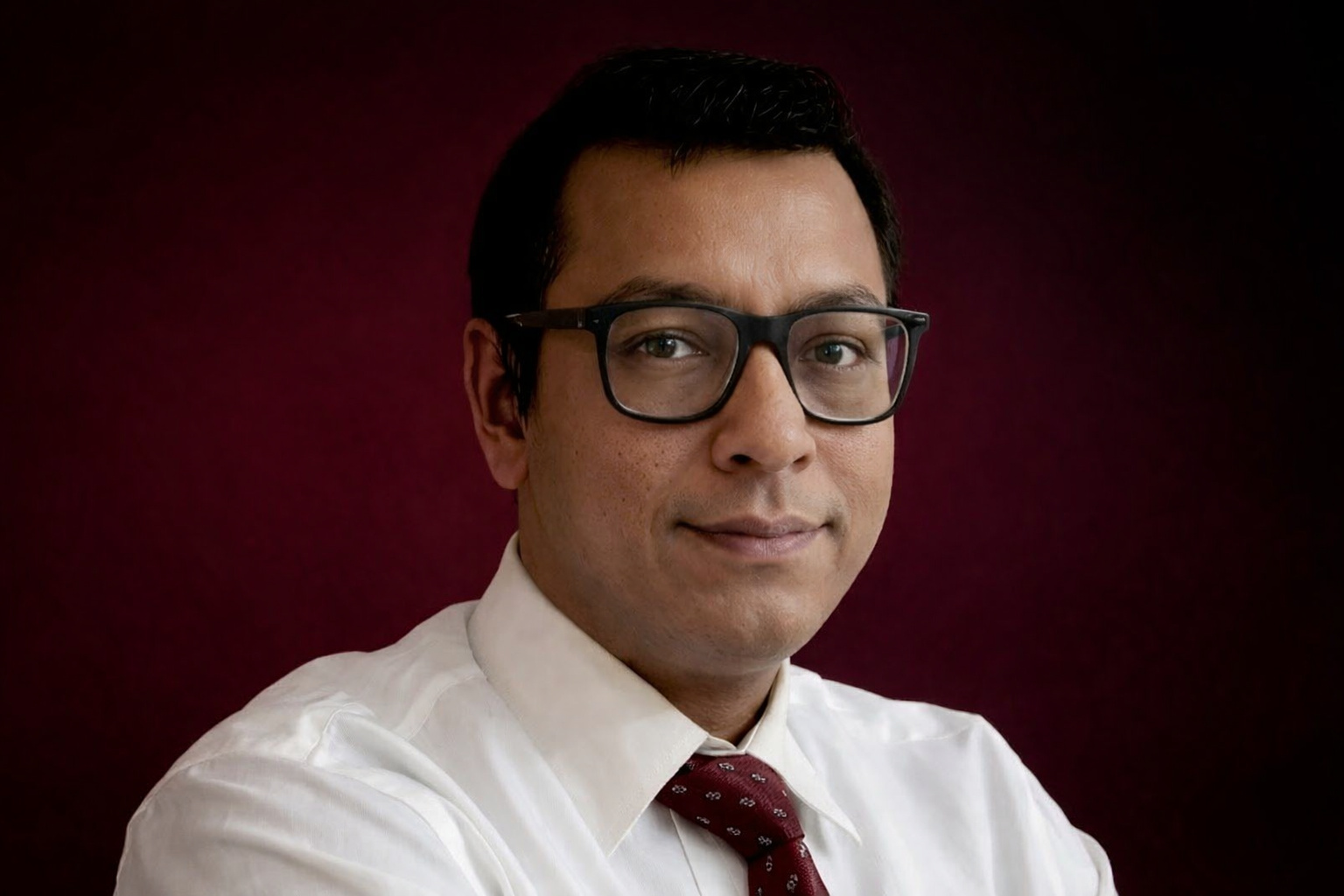
Dr. Saikat Saha
  • MDS (Oral & Maxillofacial Surgery)
  • IFAAM (Germany)

Head & Neck Oncosurgery • 22+ Years Experience


APOLLO CLINIC SIMS HOSPITAL
1000+
Surgeries Done
22+
Years Exp
5
Clinics
MDS
IFAAM Certified
iHANS™ Diagnostics

Dr. Saikat Saha - Oral & Maxillofacial Surgeon
Meet Your Surgeon

Dr. Saikat Saha

MDS (Oral & Maxillofacial Surgeon) · Head & Neck Oncosurgeon

Dr. Saikat Saha is a highly distinguished maxillofacial surgeon specializing in head and neck cancer surgery, corrective jaw surgery, complex facial reconstruction, and craniofacial trauma management. Practicing since 22+ years, he has successfully executed over a thousand life-saving and reconstructive surgeries.

His surgical philosophy rests on the concept of Whole Healthcare — bridging tumor ablation, functional rehabilitation, and aesthetic restoration into a single continuum of care. His qualifications include an MDS in Oral & Maxillofacial Surgery, combined with the prestigious IFAAM (International Fellowship in Advanced Aesthetic Medicine) from Greifswald, Germany, cementing his reputation as an authoritative expert in both surgical oncology and restoration.

MDS (OMFS) IFAAM Germany Onco-Reconstruction Trauma Specialist Apollo Affiliated

Whole Healthcare Philosophy

"We do not merely remove tumors or repair fractures. We restore functional ability and aesthetic identity so that our patients can reintegrate confidently back into their lives."


Surgical Offerings

Treatments & Specialties

Comprehensive maxillofacial care ranging from life-saving cancer surgeries to corrective reconstructive procedures.


Scheduling Wizard

Confirm Your Consultation

Secure a time with Dr. Saha in under 90 seconds.

01
Symptom
02
Location
03
DateTime
04
Details

Tell us what you are experiencing

Select a convenient location

Choose appointment date & time

June 2026
Available Slots

Please select a date first

Enter your information

Male
Female
Other

Verify via WhatsApp

For verification, we have sent a 4-digit verification code to your WhatsApp at +91 XXXXX XXXXX.

[DEMO MODE] Sent WhatsApp OTP: 4821

🛡 iHANS™
AI Screening Core

Oral Cancer & Lesions Self-Screening

Not sure if your symptoms require immediate clinical attention? Use our 60-second questionnaire tool, built using advanced diagnostic logic, to evaluate your risk status.

60 Seconds

Quick assessment based on clinical markers.

🛡
Privacy Focused

No personal data saved during check.

🤖
AI Powered

Algorithmic risk evaluation metrics.

Question Text

Low Risk

No immediate concern detected

Based on your answers, there are no immediate signs of oral cancer or acute pathology. Routine screening is advised.


Clinic Locations

Find Our Nearest Center

Dr. Saha coordinates treatment facilities across 5 primary branches in Kolkata and Siliguri.


Know Some Facts

Empowering patients through evidence-based clinical facts on facial, jaw, and oral reconstructive health.

01
Early Stage Survival
Detecting oral cancer in its early stages (Stage I or II) increases the 5-year survival rate to over 80-90% compared to late-stage discovery.
02
The 14-Day Sore Rule
Any oral ulcer, red patch, or white patch that does not heal within 14 days should be evaluated by a maxillofacial specialist.
03
Painless Lesions
Unlike infection-related mouth sores, early-stage oral cancer ulcers are frequently painless, causing many patients to delay consultation.
04
Risk in Non-Smokers
While tobacco and alcohol are major risk factors, up to 25% of oral cancer patients have no history of smoking or tobacco usage.
05
Diagnostic Biopsy
A small tissue biopsy is the only definitive medical method to confirm or rule out oral malignancy; it does not cause the cancer to spread.
06
Microvascular Reconstruction
Microvascular free flap surgery allows surgeons to reconstruct parts of the jaw, tongue, or face using the patient’s own tissue in the same session as tumor removal.
07
Pre-Radiation Dental Care
Prior to starting head and neck radiation therapy, a thorough dental evaluation is mandatory to prevent osteoradionecrosis (bone death).
08
Premalignant Lesions
Conditions like leukoplakia (white patches), erythroplakia (red patches), and oral submucous fibrosis (OSMF) have a high rate of transformation into cancer.
09
Betel Nut & OSMF
Chewing betel nut (areca nut) causes OSMF, a chronic condition leading to progressive loss of mouth opening and high cancer risk.
10
Sentinel Node Biopsy
For early oral cancer, sentinel lymph node biopsy helps identify if the cancer has spread to the neck without requiring extensive neck dissection.
11
Birth Prevalence
Cleft lip and palate are among the most common congenital craniofacial anomalies, affecting approximately 1 in 700 to 1,000 newborns globally.
12
Cleft Lip Repair Timeline
Surgical closure of a cleft lip is typically performed at 3 to 6 months of age, following the "Rule of Tens" (10 weeks old, 10 pounds weight, 10g hemoglobin).
13
Cleft Palate Repair Timeline
Cleft palate closure is ideally performed between 9 and 18 months of age, before the child begins speaking complex words, to facilitate normal speech development.
14
Feeding Adaptations
Specialized cleft bottles and obturators are used to assist cleft infants who cannot generate the suction needed for normal breastfeeding.
15
Multidisciplinary Team
Comprehensive cleft care requires a team including maxillofacial surgeons, orthodontists, speech therapists, and pediatricians.
16
Alveolar Bone Grafting
Children with clefts of the jaw bone usually require bone grafting (often from the hip) at 8 to 11 years of age to support adult tooth eruption.
17
Otitis Media Risk
Children with cleft palates have a higher incidence of middle ear fluid accumulation (otitis media) due to dysfunctional Eustachian tubes.
18
Speech Therapy Importance
Even after successful surgical closure of the palate, 20% to 30% of children require speech therapy to correct compensatory speech habits.
19
Etiology & Genetics
Clefts are caused by a combination of genetic factors and maternal environment, such as folate deficiency or smoking during early pregnancy.
20
Secondary Cleft Rhinoplasty
A final surgical correction of the cleft-related nose deformity is typically performed in late adolescence once facial growth is complete.
21
The Golden Hour
Prompt treatment of facial fractures within the initial hours of injury minimizes long-term deformity, scar tissue, and functional issues.
22
Internal Fixation
Modern trauma surgery uses biocompatible titanium mini-plates and micro-screws to hold fractured bones together internally, eliminating the need to wire the jaws shut.
23
Orbital Blowout Fractures
Direct trauma to the eye can fracture the thin orbital floor, causing the eye muscles to become trapped, which leads to double vision (diplopia).
24
Zygomaticomaxillary Fractures
A blow to the cheekbone (zygoma) can affect eye position, jaw movement, and cause numbness in the cheek and lip due to nerve pressure.
25
Soft Tissue Lacerations
Facial cuts require precise anatomical alignment by a specialist to minimize scarring and preserve facial nerve function.
26
Mandibular Fractures
The lower jaw (mandible) is the most frequently fractured facial bone in accidents, often presenting with misaligned teeth (malocclusion) and painful chewing.
27
Condylar Fractures Management
Fractures of the jaw joint (condyle) can sometimes be managed non-surgically with physiotherapy to prevent joint fusion (ankylosis).
28
Nasal Bone Fractures
Nasal fractures must be reduced within 7 to 10 days before the bone fragments begin to heal in a displaced position.
29
Facial Nerve Assessment
Any deep facial trauma near the ear or cheek must be evaluated for damage to the facial nerve, which controls facial expressions.
30
Custom 3D Implants
In complex reconstructive cases, patient-specific 3D-printed titanium implants are created to perfectly restore facial symmetry.
31
What is Orthognathic Surgery?
It is the surgical correction of severe skeletal jaw discrepancies that cannot be resolved with orthodontic braces alone.
32
Bite Correction
Orthognathic surgery repositions the upper jaw (maxilla), lower jaw (mandible), or chin (genioplasty) to restore a functional bite and facial balance.
33
Sleep Apnea Solution
Maxillomandibular advancement (MMA) surgery widens the airway and is one of the most effective surgical treatments for severe obstructive sleep apnea (OSA).
34
Pre-Surgical Orthodontics
Most corrective jaw surgery cases require 12 to 18 months of orthodontic braces prior to surgery to align the teeth within each jaw.
35
Intraoral Access
Almost all orthognathic surgical incisions are made inside the mouth, ensuring there are no visible external scars on the patient's face.
36
Skeletal Maturity Requirement
Corrective jaw surgery is performed after jaw growth has stopped, which is generally 16-18 years for females and 18-21 years for males.
37
Le Fort Osteotomy
The standard surgical technique to reposition the upper jaw is the Le Fort I osteotomy, which allows movement in all three dimensions.
38
Bilateral Sagittal Split (BSSO)
BSSO is the primary technique used to advance or set back the lower jaw, preserving the inferior alveolar nerve.
39
Genioplasty
Genioplasty is a procedure to move the chin bone forward, backward, or vertically to correct chin deficiencies and improve airway space.
40
Virtual Surgical Planning (VSP)
Surgeons use advanced CT scans and 3D computer software to simulate the entire surgery virtually before operating.
41
Osseointegration
Dental implants are made of biocompatible titanium, which physically fuses with the jawbone over a period of 3 to 6 months.
42
Preventing Bone Loss
When a tooth is lost, the surrounding jawbone naturally shrinks over time; dental implants stimulate the bone, preserving facial structure.
43
Sinus Lift Surgery
If the upper jaw lacks sufficient bone depth due to proximity to the maxillary sinus, a sinus lift is performed to add bone graft material.
44
Autogenous Bone Grafting
The gold standard for jaw bone grafting is using the patient's own bone (harvested from the jaw or hip), as it contains active bone cells.
45
All-on-4 Technique
This treatment allows an entire arch of missing teeth to be supported by just four strategically angled dental implants.
46
Zygomatic Implants
For patients with severe upper jaw bone loss, extra-long implants can be anchored into the cheekbones (zygomatic bones) instead of the jaw.
47
Immediate Loading
In selected clinical cases, a temporary crown can be attached to the dental implant on the same day the implant is surgically placed.
48
Success Rates
Dental implants have a clinical success rate of 95% to 98% when placed by qualified surgical specialists under sterile conditions.
49
Peri-Implantitis Warning
Poor oral hygiene and smoking are the leading causes of peri-implantitis (gum infection and bone loss around implants), leading to failure.
50
Ridge Splitting
When the jawbone ridge is too narrow for implants, surgeons can split the bone and place graft material to widen the site.
Apollo Clinic Partner
MDS & IFAAM Certified
100% Patient Privacy (GDPR)
iHANS™ Powered

Patient Queries

Frequently Asked Questions

Answers to common questions regarding procedures, clinical locations, and scheduling details.

Dr. Saha treats a wide array of oral and maxillofacial conditions, including head and neck cancers (oral, tongue, jaw, throat, and salivary cancers), jaw bone discrepancies (crooked bite or asymmetry requiring corrective jaw surgery), advanced missing teeth cases (dental implants and bone grafting), temporomandibular joint (TMJ) disorders, congenital facial deformities (cleft lip/palate), and emergency maxillofacial trauma or fractures.
No, a formal medical referral is not required to book a consultation. You can schedule an appointment directly using our online booking wizard by choosing your primary symptom or concern. If you have any previous biopsy reports, CT scans, or x-rays, please bring them to your consultation.
We operate across 5 primary clinics located in Kolkata (Newtown, Jorasanko, Salt Lake) and Siliguri (Hakimpara, SIMS Hospital). You can select the clinic nearest to you. If you click "Use my location" in the booking wizard, our system will automatically suggest the closest center based on your geographical proximity.
An oral ulcer or sore that persists for more than 14 days without showing signs of healing, especially if accompanied by bleeding, hardness, or a lump in the neck, requires immediate evaluation. You can use our integrated iHANS™ oral self-check tool on this site to assess your risk category, and if flagged high, schedule a priority consultation immediately.
During the initial consultation, Dr. Saha will conduct a detailed clinical examination of your face, mouth, and neck. He will review your medical history and examine any existing imaging scans. If necessary, diagnostics like biopsies or high-resolution imaging will be ordered, and a customized treatment plan outlining options, surgery requirements, and rehabilitation recovery will be discussed.
Yes. We regularly treat patients traveling from other parts of West Bengal, neighboring states in Northeast India (Assam, Sikkim, etc.), and international patients from Bangladesh, Nepal, and Bhutan. We help coordinate travel plans, hospital admissions, and postoperative review schedules for outpatient visitors.
For routine cases, slots are usually available within 2 to 3 days. However, emergency facial injuries or cases flagged as high priority (like suspicious oral ulcers/tumors) are fast-tracked. Our clinical team reviews urgent entries and will contact you to expedite the scheduling, often offering slots within 24 hours.